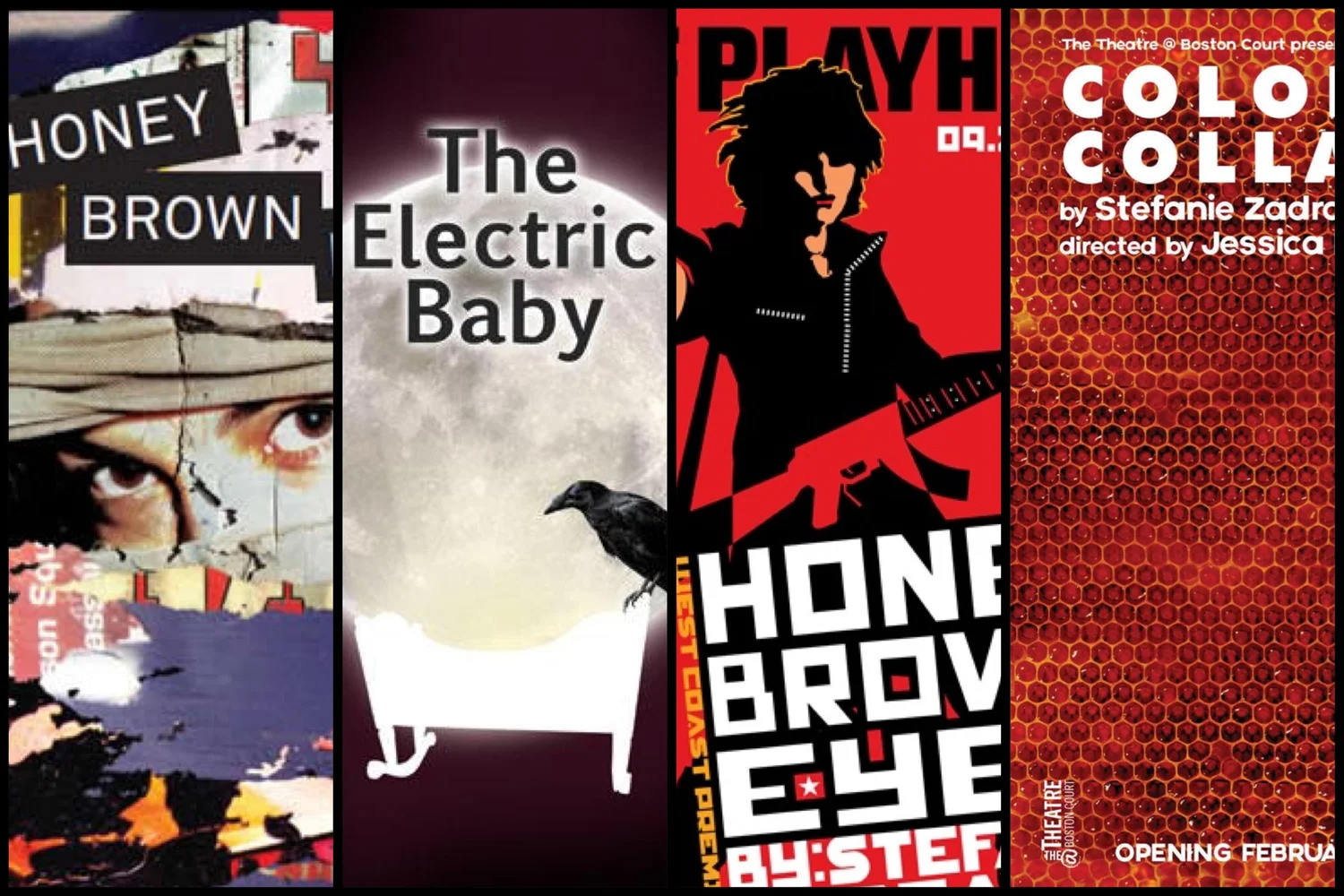
A scholarly article was published in The Journal of American Drama and Theatre titled, “Pornography of Violence” Strategies of Representation in plays by Naomi Wallace, Stefanie Zadravec and Lynn Nottage. Now am I completely tickled because my name is so casually placed in a sentence with the amazing Naomi Wallace and Pulizer Prize-winner Lynn Nottage, or because it’s so casually placed in a sentence with the word pornography?
The article, by Barbara Ozieblo, discusses how re-enacting or even talking about rape on stage can become “pornographically erotic” and explores how three female writers handle the rape and violence in their plays which aim to address social injustice.
Ozieblo writes:
“In The Heart Of America, Honey Brown Eyes and Ruined, the women victims, even if ghostly, are strong presences, models of warrior women who care for others and, in Zadravec’s piece, Alma gives her life in a vain attempt to save her daughter.
…
“Although, on some level, Honey Brown Eyes is about the consequences of armed conflict for women, Zadravec avoids making a spectacle of the victims.”
“Another ‘clump’ of recent though ‘buried.’ history informs Stefanie Zadravec’s Honey Brown Eyes (2008), where, rather than reject realism, she chooses to lace it with surreal comedy. The action takes place in June 1992 in Bosnia, when the Serbian Paramilitary group, the White Eagles, was intent on wiping out the muslim population. Zadravec, like Wallace and Nottage, is careful to present her story in such a way as not to alienate the spectator by affording pleasure through the morbid gaze directed at a victim. We do not see rape, nor are we told of it, except as something not to be talked about. Honey Brown Eyes, according to its author, uses the concept of ghostly – and so at least, in some sense, absent – protagonists although her characters, female and male, have total bodily presence on the stage. As she explains, “It’s a cast of walking ghosts, people beyond hysteria.” Her women accept the seemingly inevitable violence of their situation in a state that borders on the unconscious and continue with their routine tasks: Serbian Jovanka insists on sharing her soup with Muslim Denis who seeks refuge in her kitchen from his Serbian pursuers; Muslim Alma automatically offers Dragan, her Serbian intruder, freshly-made hot coffee – which scalds his tongue and, in at least one performance, raised laughs in the audience. Such acts of everyday life, which a reviewer found, “strangely comforting and yet oddly disturbing,” and the “purposefully spare” dialogue mute the tone of Honey Brown Eyes and make the reality of war ghostly or remote, while paradoxically bringing it home, right into the kitchen, the realm of the everyday that we all share.
“As audience we witness the terrifying invasion of Alma’s kitchen by Dragan and their confrontation during which Alma is too concerned with the fate of her husband and children to register the danger she is in. On the other hand, Daragan’s surreal slippage between invader and television show host throughout the first scene signifies to the audience his lack of conviction and aplomb in the role of aggressor. When he beats Alma up at the end of the first scene, the spectators’ sensibilities are spared by the blackout; the applause and music of the TV show that punctuate act 1 resonate in our ears. The sound-track of the show – the TV set will become one of the spoils of war – complicates the levels of reality for the audience in which, as Zadravec points out, “TV both connects to the play and disconnects us as a people.
“When at the end of the second scene of act 1 Dragan shoots Alma, we hear the shot, but the blackout does not allow us actually to see what has happened. Denied the dubious theatrical pleasure of seeing death, we, as audience, recognize that Dragan has killed her, and that he has done so to keep her from the horrors of the rape camp. As he then haltingly explains in act 2 to Zlata, Alma’s daughter, who had been hiding in the kitchen throughout,”Its not what you think… They were going to take her and do terrible things… I thought she was better off.”
…..
There’s more but you get the idea.